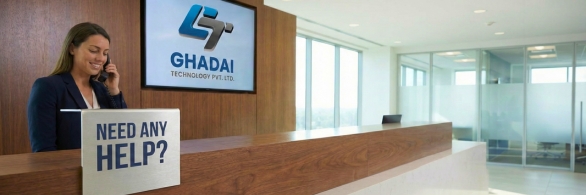



Frequently Ask Questions
Common questions and answers are presented here in the FAQ area. You will find the answers to frequently asked questions on different services.
Q: What is the "1-Micron Lab" initiative?
A: It is India’s first turnkey "Foundry-in-a-Box" solution. We establish commercial-grade semiconductor fabrication facilities capable of 1-micron precision manufacturing. Unlike standard academic labs, these are production-ready environments designed for MEMS and Power Electronics.
Q: What kind of equipment do you use?
A: We use industrial-grade Korean Lithography Systems and Taiwanese PVD Systems , ensuring research meets global standards.
We stand out for delivering high-performance IT and Telecomm Products and Services as per your business requirements. Our commitment to reliability, scalability, and cutting-edge technology ensures that your IT Infrastructure supports your growth and performance needs seamlessly. We provide end to end Products, Services and its solutions.
We generate efficiency, seamless data flow and reliability for your network.
Fast, secure, and innovative—our Wi-Fi solutions provide reliable connectivity with the latest technology without any dark areas.
We tailor network solutions to your unique requirements, ensuring a perfect fit for your goals.
Q: Is there a fee for the training program?
A: Our fee structure is based on our institutional partnership model:
For Partner Universities: If an institution establishes their 1-Micron Semiconductor Lab through Ghadai Technology, the training program is provided at Zero Cost (Complimentary) as part of the ecosystem setup.
For Non-Partners: For institutions or individual candidates not part of our lab infrastructure network, a standard commercial training fee applies. Please contact our sales team for detailed commercial pricing.
Q: What is the nature of the Joint Venture with SSN?
A: It is a strategic India-Sweden partnership. It bridges European design methodologies with Indian engineering scale, allowing us to offer Staff Augmentation and ODC Services to European clients while opening career mobility for Indian talent.
Q: Why Taiwan?
A: Taiwan is the global hub of chip manufacturing. Our program gives Indian students a once-in-a-lifetime opportunity to work inside this advanced ecosystem.
Q: What is the onboarding process?
A: We handle everything: Selection, Grooming (by Taiwanese experts), Logistics, and Placement.
Q: What specific networking hardware do you deploy?
A: We specialize in rugged, industrial-grade hardware including Media Converters, Managed PoE Switches, and Industrial Routers designed for harsh environments (e.g., Cement/Steel industries).
Q: How comprehensive is your Surveillance capability?
A: We design IP-based Command Centers with video walls and remote analytics. For critical zones, we integrate Biometric Access Control creating a "Smart Defense" grid used by clients like Amity University and Swiggy.
Q: Do you offer maintenance?
A: Yes. We offer comprehensive AMC (Annual Maintenance Contracts) covering fiber repair (Splicing/OTDR) and active hardware replacement to ensure 99.9% uptime.
Gain centralized control, real-time monitoring, and automation for proactive network management.
Our solutions provide a reliable and scalable foundation, supporting business growth and daily operations.
We prioritize advanced features, encryption, and regular updates to safeguard your network and data.
Designed for simplicity, our products empower your team with easy-to-use tools.
Access responsive technical assistance and troubleshooting—your reliable partner for ongoing support remotely and physically Field Engineer support.
Consider your budget and the criticality of your system. If minimizing unexpected costs is a priority and you want full coverage, comprehensive support may be more suitable. If you are comfortable managing replacement part costs separately, non-comprehensive support might be a cost-effective option.
When you encounter an issue outside regular hours, you contact the on-call support team. They will assess the situation remotely or, if necessary, dispatch personnel to address the problem.
Passive networks are often more reliable and have lower maintenance costs as they lack active electronic components that could fail. They also tend to be more energy-efficient.
Passive networks are typically used for basic connectivity. If your network requires amplification or signal regeneration, you might need to incorporate active components.
Preventive maintenance helps identify and address potential issues before they become major problems, reducing downtime and extending the lifespan of equipment.
The frequency of preventive maintenance depends on the type of equipment and usage. It's typically scheduled at regular intervals, such as monthly, quarterly, or annually. The manufacturer's guidelines and your usage patterns can help determine the appropriate schedule.